Things That Family Medicine Physicians Don't Get Reimbursed for
What Happens if We Run Out of Doctors?
SMG'south Davidson studies shortage of main care physicians
A doc deficit plagues the country, and persuading more medical students to become erstwhile-fashioned full general practice family docs requires three measures: more public subsidies for medical education, more than main care provided by nurses and strange doctors, and a stomach for alphabet-soup abbreviations.
Those conclusions jump from two studies now being conducted by Stephen Davidson, a School of Management professor of markets, public policy, and law. Aided by students in the Undergraduate Enquiry Opportunities Programme, which offers BU undergrads the opportunity to participate in inquiry projects with a faculty mentor, Davidson is seeking a solution for a trouble that the American College of Physicians has issued a dire alarm almost: "Primary care, the backbone of the nation's health care organization, is at grave risk of collapse."
I of Davidson'south projects looks at existing public subsidies for medical instruction, to save the debt burdensome many students who might become primary care physicians (PCPs)—here'south where the abbreviations start. The 2nd project asks whether advanced practice nurses (APNs) and international medical graduates (IMGs), or doctors trained at foreign medical schools, tin can provide some intendance in the absence of more homegrown docs. APNs are nurse practitioners and other types of nurses trained in sure care that was in one case washed by doctors alone.
How big a trouble is the lack of main care docs? The New England Journal of Medicine notes that "a growing proportion of patients written report that they cannot schedule timely appointments with their physician." Davidson cites another barometer: just a third of American doctors are in chief care, compared with half or more than docs in other developed nations. With 30 meg uninsured Americans scheduled to get insurance in 2014, says Davidson, "that shortage is going to go even more acute."
In role, fewer medical students choose primary intendance because specialties pay more (on average last yr, roughly $203,000 versus $356,900, says the Medical Grouping Direction Association). "It'due south not that primary care physicians don't get paid well compared to other professions," says Ashwini Kerkar (SAR'xiii, MED'17), who is assisting with the subsidy study. "It'due south just that they don't get paid as well every bit an orthopedic surgeon." Reimbursements based mostly on the quantity of medical services forces PCPs onto an exhausting conveyor belt that rushes patients in and out, and that workload is strained farther past an aging, overweight patient population.
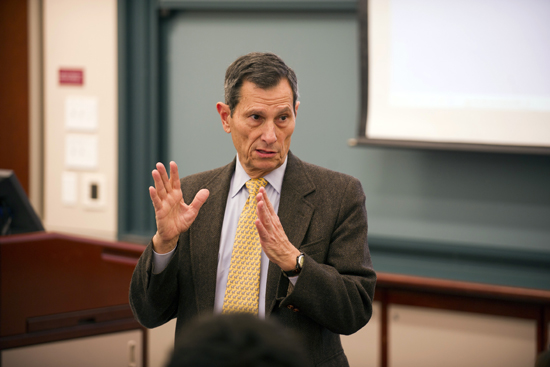
Uncle Sam does offering scholarships and loans to students who go into chief care and hold to serve in doctor-starved regions for a few years later on graduation, through the National Health Service Corps and the Public Wellness Service Act. Those programs have had some success, says Davidson, whose research probable volition recommend increasing funding.
But even if more medical students opted for primary care, there are constraints on how many PCPs we can churn out. "Med schools can only expand so much," Kerkar says, and tin't keep up with need for family doctors. "Only people with heart issues demand cardiologists. Everyone needs a master intendance doctor."
Importing strange-trained docs might help, but that poses the ethical problem of a brain drain from countries that desperately demand medical care, too. "Should it be U.S. policy to import physicians from countries that have an fifty-fifty greater shortage than we exercise?" asks Davidson. "That'due south a hard sell."
Hence the thought of growing primary care services, every bit opposed to master intendance doctors, past assuasive APNs to do more such care "largely on their own," he says. Legal restrictions, which vary state to state, sometimes curtail how much subbing for doctors nurses may do, and APNs study fewer years than doctors, says Davidson, who suggests researching the advantages of lengthening the preparation for APNs.
There's some other impediment: "I really talked to a doctor, and he doesn't concord with the thought that an APN can practice as much" equally a physician, Kerkar says. "And that's understandable. Because he went through that many years of medical school. Why would you remember someone can do the aforementioned thing with three years of training? It'due south like devaluing your own service." Her response: empowering APNs would ease doctors' workload, giving them more time to practice the things just they can practise.
Budding md Kerkar found an economics-oriented research project intriguing. "I personally don't like working in labs," she says, "and this interested me because I'd always looked at just the science backside the entire medical field, and never as to how it was managed."
Davidson expects to have written papers summarizing the research results by jump. It's a longtime enquiry involvement for the SMG professor, who last year wrote Notwithstanding Broken: Understanding the U.Due south. Health Care Organization, which catalogues the health reform to-practice list lingering afterward passage of Obamacare.
Explore Related Topics:
-
Rich Barlow
Senior Writer
Source: https://www.bu.edu/articles/2011/what-happens-if-we-run-out-of-doctors/
0 Response to "Things That Family Medicine Physicians Don't Get Reimbursed for"
Post a Comment